Before the walk
Prepare a comfortable setup, suitable rewards and a route with room to turn around.
PUPPY WALKS · A GENTLER WAY TO LEARN
A clear, reward-based starting plan for first-time puppy owners who want neighborhood walks to feel more manageable.
Learn what to practice, when to reward and what to do when the leash goes tight, without harsh collars or needing to book private lessons to begin.
One-time payment · 30-day refund policy · Written lessons you can follow at your own pace
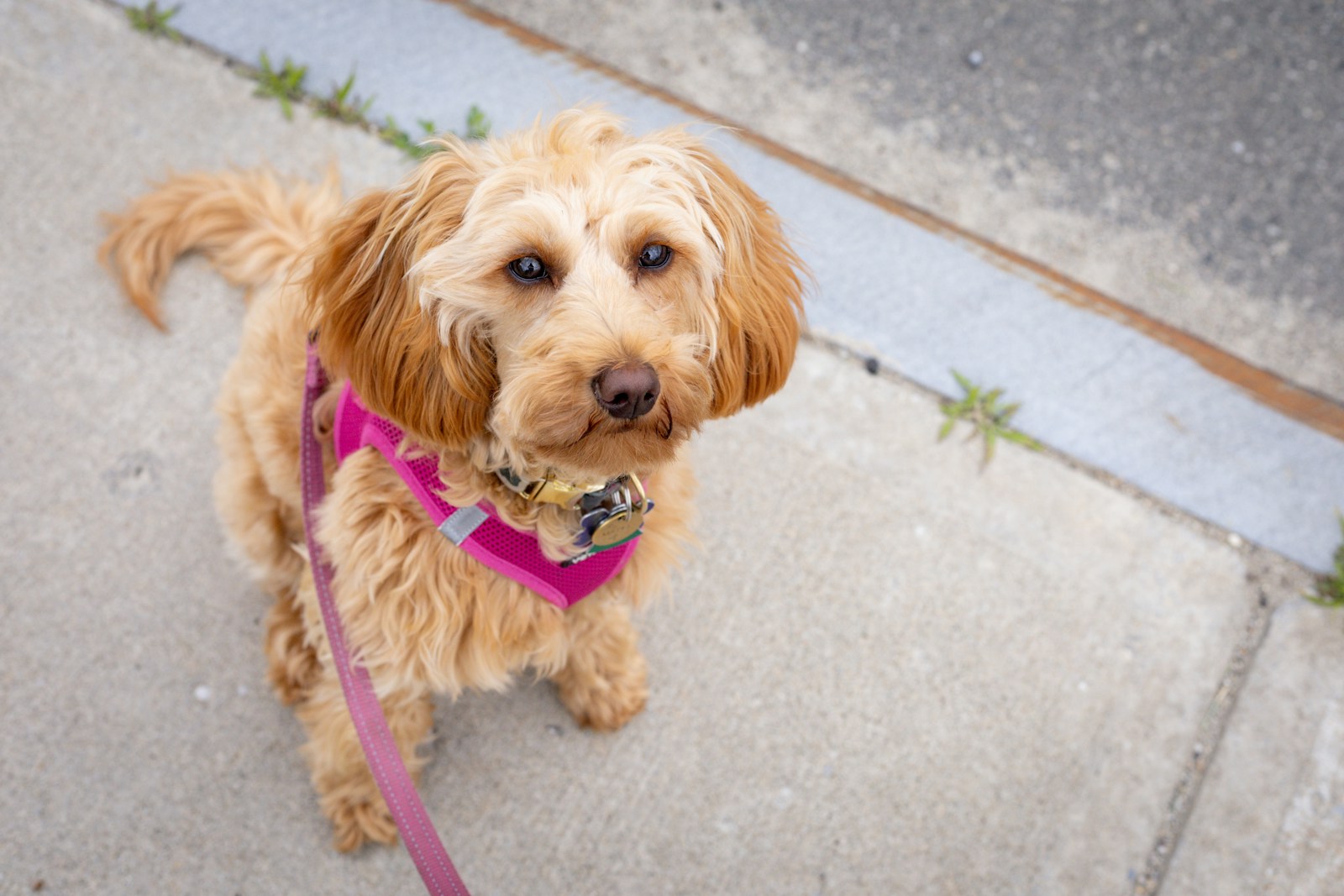
A WALK SHOULDN’T FEEL LIKE GUESSWORK
The leash tightens. You stop. Your puppy comes back for a treat, then pulls again. Or the hallway practice goes well, but everything changes at the front door.
Puppy Walks helps you break the job into smaller skills: comfortable equipment, clear rewards, a few easy steps, a manageable route and a plan for distractions.
You’ll learn how to make an exercise easier when it isn’t working, instead of repeating a frustrating loop.
YOUR PRACTICAL STARTING POINT
Prepare a comfortable setup, suitable rewards and a route with room to turn around.
Reward slack before the next pull, build short sequences and rehearse a friendly turn.
Use the troubleshooting guide for repeated pulling, distraction, freezing or leash grabbing.
THE COMPLETE LEARNING PATH
Every lesson includes a practical task, an example and workbook prompts. Open a module to see the four lessons.
Understand your puppy’s starting point and choose a safe first practice.
Two knowledge-check questions with explanations.
Prepare equipment, rewards and handling before leaving home.
Two knowledge-check questions with explanations.
Build clear reward timing and a short slack-leash sequence.
Two knowledge-check questions with explanations.
Transfer foundation skills to a manageable neighborhood setting.
Two knowledge-check questions with explanations.
Prepare space, passing plans and safe changes of direction.
Two knowledge-check questions with explanations.
Know how to simplify recurring problems and when to stop.
Two knowledge-check questions with explanations.
Build a sustainable household plan and evaluate it fairly.
Two knowledge-check questions with explanations.
TOOLS YOU CAN USE AGAIN
Download plain-text templates to keep on your phone, adapt or print. Your personal workbook brings your lesson notes together.
TRY A COMPLETE LESSON
Increase distance only while the easy version is comfortable.
Begin beside the puppy in a quiet enclosed space. Take one small step. If the puppy moves with you and the leash remains slack, mark and reward near your side. Reset without dragging the puppy into position.
When that is easy across several brief sessions, occasionally try two steps before rewarding. Mix easier repetitions back in. The numbers are examples; the puppy’s comfort and success matter more than completing a sequence.
If the leash repeatedly tightens, return to a shorter distance between rewards. A long unsuccessful attempt teaches less than a manageable one. Leave the session while there is still a simple success available.
Make it easier: Return to stationary reward position or a single step.
Fictional example: Milo can do two steps in the kitchen but pulls at five. Nina practices one and two steps instead of repeatedly testing five.
This is not an individual assessment or a treatment plan for panic, aggression, pain or unsafe lunging. If your puppy is distressed, unwell or too strong to handle safely, seek veterinary or qualified reward-based help.
Ask your vet about outdoor readiness and appropriate activity. You can begin the suitable foundations indoors.
PUPPY WALKS BY PAWOPTIMA
Learn at home, practice where your puppy can succeed, and keep the tools for your everyday walks.
30 days to decide. Request a full refund within 30 days, even if you have opened the course. Your statutory rights are unaffected.
Applicable taxes included. Sold through Link with Stripe Managed Payments. After confirmed payment, use your purchase email to access your course.
No course can promise that for every puppy. This teaches foundation skills and decisions you can practice. Results depend on the puppy, environment and practice; there is no fixed completion deadline.
You do not need to book private lessons to begin the suitable foundation exercises. Some puppies need individual veterinary or reward-based training support, especially for distress, pain or unsafe behavior.
No. It is a structured course of written lessons, practical steps, examples, knowledge checks and reusable tools. There are no demonstration videos or live coaching sessions included.
Use short, comfortable opportunities and breaks. The lesson examples are starting points, not exercise prescriptions. Ask your vet about appropriate activity and outdoor readiness for your puppy.
Comfortable, secure equipment suitable for your puppy, a fixed-length leash and appropriate rewards. The course explains what to check; it does not require a particular brand or harsh collar.
No. Buy with the same email and both purchased courses will appear in My courses. Buying one course does not automatically unlock the other.
Notes and progress are saved in your browser on this device. Download the workbook to keep a copy. Your login protects access; it does not sync your workbook.
The original educational material is informed by the linked research and welfare guidance. It has not been independently reviewed by a veterinarian or qualified trainer. No organization or specialist endorsement is claimed.
Selected sources inform the course. They do not endorse PawOptima or establish a guaranteed result for this program.
AVSAB: Humane dog training position statement
Dogs Trust: How to stop your dog pulling on the lead
RSPCA: Teach your dog to walk without pulling
Blue Cross: Dog and puppy training
Dogs Trust: How to train your dog to wear a harness
Dogs Trust: Understanding reactive dogs
Dogs Trust: Taking your puppy on their first walk
AAHA: What to do when you first bring home a new puppy